Introduction
You have a right to perform your prescribed duties, but you are not entitled to the fruits of your actions. Never consider yourself to be the cause of the results of your activities, nor be attached to inaction.
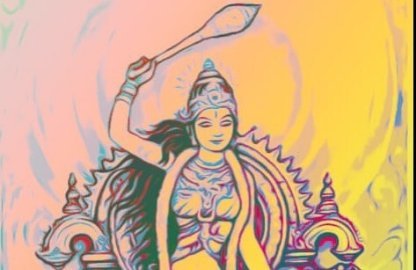
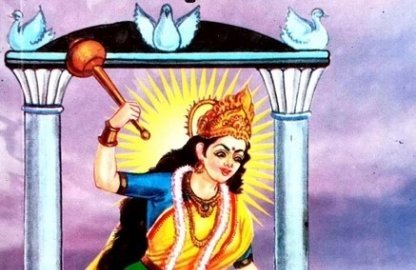
Bhavarth - I have not written this book, "The Mystery and Great Worship of Maa Baglamukhi Devi," in the hope of receiving any accolades but as a small attempt to bring the vision of Maa Baglamukhi Devi to her devotees. I do wish to receive love and blessings from devotees. Undoubtedly, Nalkheda has been a religious town, but why historians and religious thinkers have not focused on it is the subject of my interest. The design and construction of buildings and sculptures have their roots in ancient science and the art of Vastu Shastra, a part of the Atharvaveda. Unfortunately, in the current era, the Vastu system is often disregarded in the construction of grand temples. The temple of Maa Baglamukhi Devi is one of the important temples of India. Keeping the subject matter in mind, I have presented my devoted thoughts on the worship of Maa Baglamukhi Devi and the significance of Nalkheda. Let us look through the mirrors of history, astrology, religious texts, and Vastu Shastra to understand the period during which the temple of Maa Baglamukhi Devi and the city of Nalkheda were constructed.
1. Datia - In Datia, the following famous temples are considered significant: the primary temple of Dantakreshwar, also known as Madia Mahadev, Vanakhandeshwar, Pakoria Mahadev, Narasingh Temple, Bada Govindji, Raj Rajeshwar, and Bhairavji. The miraculous temples of the major goddesses Chhinnamasta and Ashtamadevi, including Maa Baglamukhi Devi, are also found here. The idol of Kali Mata in Ratangarh was established by Chhatrapati Shivaji. The sculpture in the temples of South India is unparalleled in the world.
2. Abu - Abu Hill houses the world-famous artistic Jain temples. The beautiful marble statues of Lord Mahavira and the Jain Tirthankars are examples of exquisite architecture. The intricate carvings on these statues are unmatched in the world. Historical temples like Devwara Yagyeshwar Nath, Marble Tirth, and other Jain temples are also significant. All art lovers around the world know the sculptures of Ajanta and Ellora. In Ujjain, temples like Mahakal, Chintaman Ganesh, Kalabhairav, Harsiddhi, and Mangalnath are sources of sculptural art. The Somnath temple is categorized not only as a historical temple but also as a religious one. Due to my health not being good, my search has come to a halt. I apologize to the discerning readers for this.
Searching for the Antiquity of Maa Baglamukhi Devi Temple and the Importance of Nalkheda
To explore the antiquity of the temple, we need to reflect on the Mahabharata era. The discerning reader should know that historians consider the Mahabharata war to have occurred around 3000 years before Christ. This war is mentioned in Paninis grammar, leading scholars to believe its age is about 2-3 thousand years before Christ.Dr. Radhakrishna Ranade, Shri Gopalacharya, and other scholars agree with this perspective, but Chintamani Rao Vaidya does not. He considers the period of Mahabharata to be around 5000 years old. Historian Rajaram Shastri also holds this view. Reflecting on these opinions, we get closer to the truth of the temples antiquity.
2. From the study of Ramayana, it is known that when Rama was doubtful about victory in the face of Ravana vast army and valor, he too had to seek refuge in Shakti. With the resolve to win, he worshipped Shakti and obtained victory through her blessings. (There are thousands of such examples in religious texts). Similarly, when the Pandavas lost their wealth and kingdom, they sought refuge in Lord Krishna. The Lord directed them to worship Goddess Maa Baglamukhi, who destroys enemies and grants victory in battle.
3. We should also understand that Lord Vishnu, being the protector of the three worlds, knew the truth that when a terrible storm came upon the world, he himself was unable to stop the deluge. He then sought refuge in the goddess, who advised him to worship Maa Baglamukhi. Lord Vishnu performed the worship of Maa Baglamukhi at a place called Haridra in Saurashtra. Pleased with the worship, Maa Baglamukhi appeared before him, listened to his compassionate plea, and stopped the deluge, freeing him from worldly concerns. Therefore, he instructed the Pandavas to worship Maa Baglamukhi Devi to overcome their hardships and achieve victory in battle. The Pandavas gladly accepted the Lord command and set out to find a place for worship. They decided to choose a place where they could attain heavenly peace and succeed in their penance.
Lakhundar (Laxmana) River
Inspired by Lord Krishna, the Pandavas rested at the present location where the temple of Maa Baglamukhi Devi now stands (Nalkheda). Near the banks of the Lakhundar River, the Pandavas performed intense penance for Maa Baglamukhi Devi. Pleased with their penance, the Goddess appeared to them and blessed them with victory in battle. If we study the Adhyatma Ramayana or the Tulsi Ramayana, we will see that by the grace of Shakti, Rama was able to defeat Ravana vast army and achieve victory in Lanka. Similarly, the Pandavas were victorious in their battle due to the grace and blessings of Maa Baglamukhi. In the Mahabharata, we see that Krishna had vowed not to lift any weapons during the war. He was seen only as a charioteer during the battle. In my contemplation, it seems that without the grace of Maa Baglamukhi Devi, it would have been impossible for the Pandavas to win the war. The temple of Maa Baglamukhi is mentioned during the time of King Vikramaditya as well. If we study the style of statues worldwide, we find that the knowledge of sculpting idols existed around 2500 or 3000 years before Christ. However, the divine idol of Maa Baglamukhi Devi appears in the style of 3000 years ago. Personally, I have concluded that the temple of Maa Baglamukhi Devi in Nalkheda dates back to around 3000 years before Christ.